
 Image 1 of 3
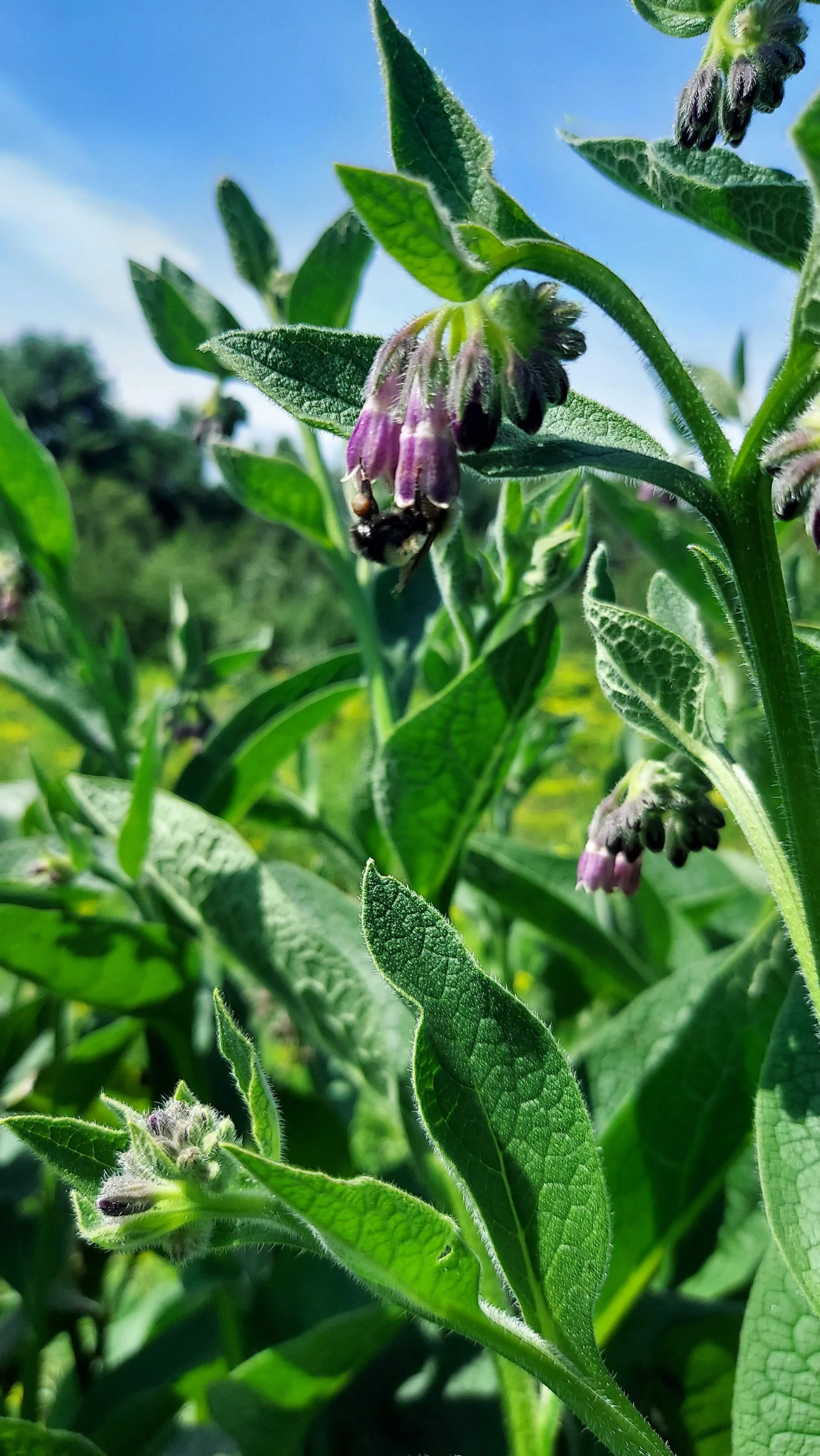 Image 2 of 3
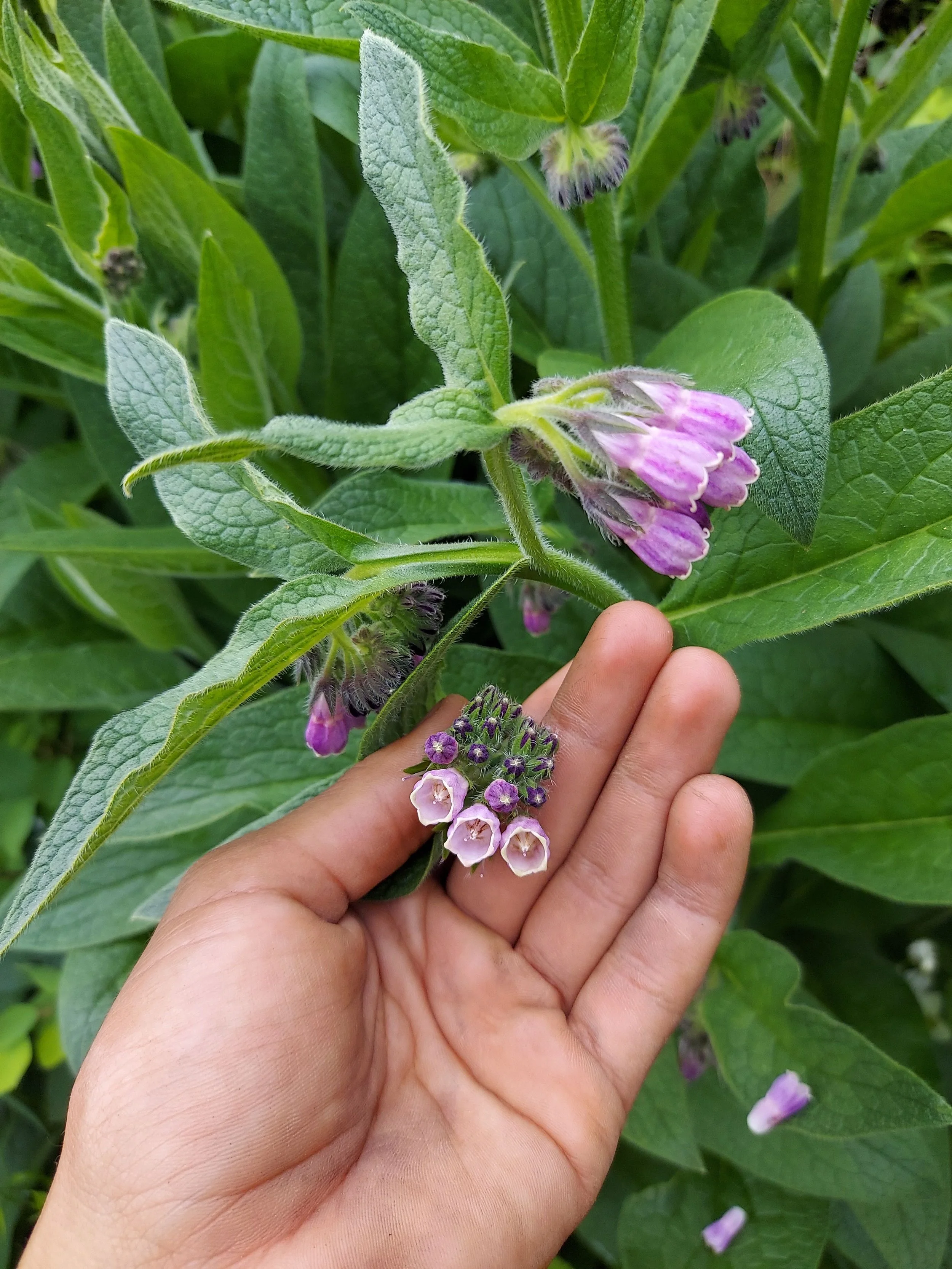 Image 3 of 3
A non-invasive, sterile cultivar of comfrey. This cultivar will not spread via seed but will get bushier if left to its own devices, and it will grow new plants from root segments. We don’t recommend it for small gardens, but it works great in an orchard, yard, or larger garden setting. The price includes 2 bare-root crowns. We ship these in Spring and Fall, and they can also be purchased for local pick-up.
Comfrey is a powerhouse in the garden, serving many functions:
It grows vigorously and can be cut back regularly and used for nitrogen-rich mulch (also known as chop-and-drop).
It puts down a very deep taproot that pulls up many different types of minerals into its leaves - potassium, calcium, phosphorous, silica, and more. When you use the leaves as mulch, those minerals get redistributed on the land. You can also make a “tea” with the leaves and use it as an organic spray in your garden or orchard to get these nutritional benefits.
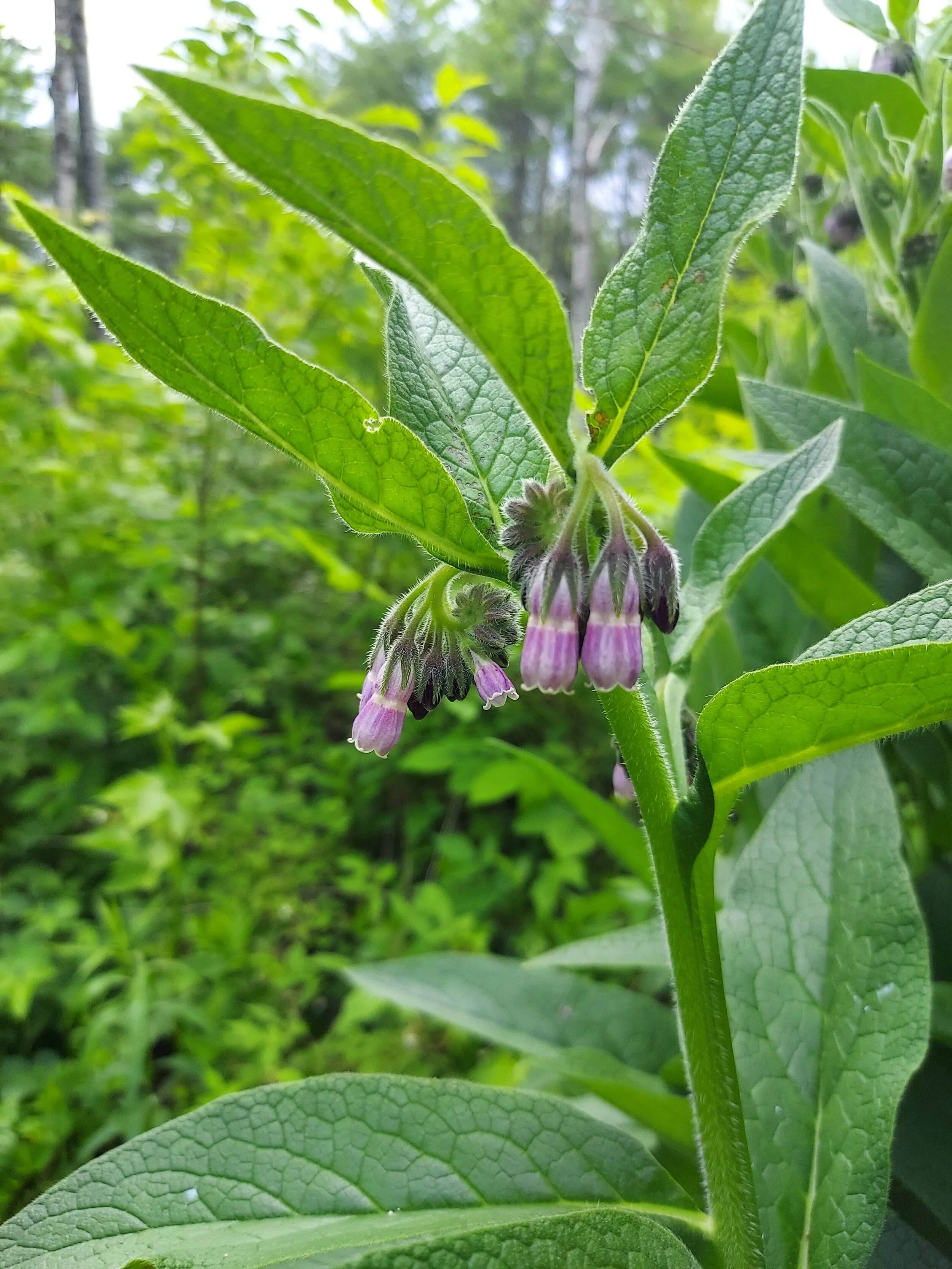
It’s very beautiful, with drooping purpley-pink, bell-shaped flowers that pollinators love.
The foliage can also be used as fodder for chickens, pigs, and other animals.
The roots are used to make highly medicinal salves and ointments for heaing soft tissue wounds and alleviating things like joint pain and sprains.